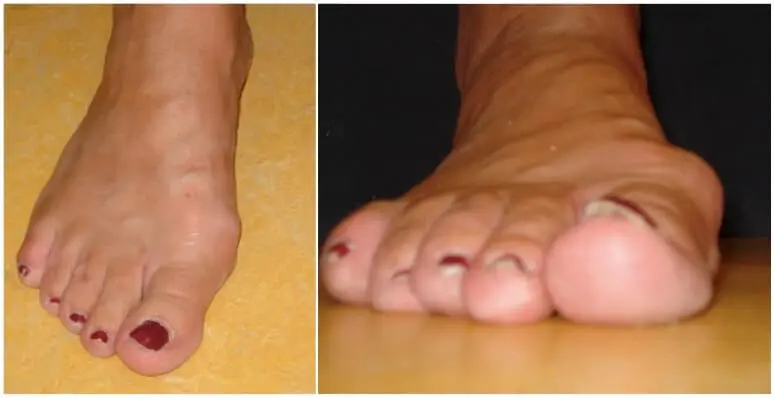
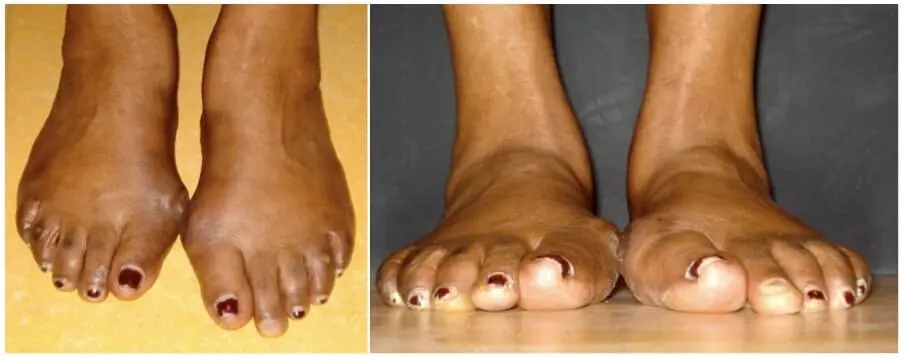
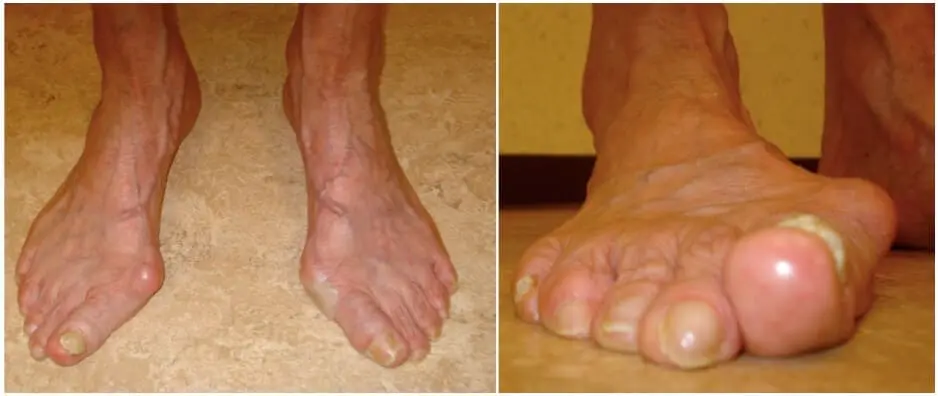
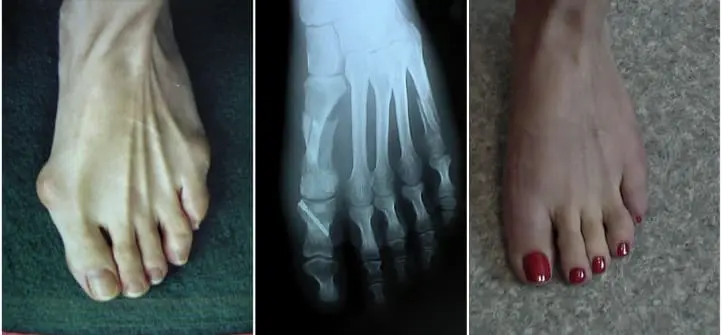
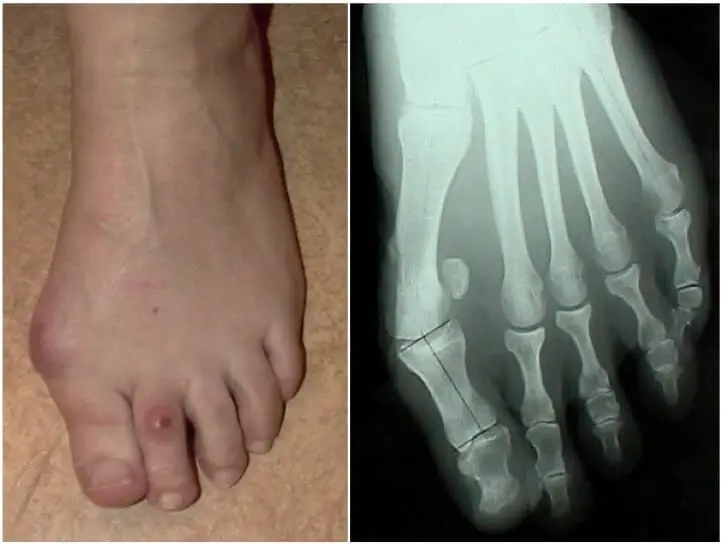
Several causes have been described. Often, there is familial tendency and, in most cases, this deviation is found in women. Wearing close fitting, high footwear, can worsen the deviation.
Since a certain imbalance is created between the bone structures, the ligaments and the tendons, this “valgus” deviation has a progressive increase of deformity, which can spread over several years, if not decades.
Largely, the treatment of a hallux valgus deviation can be summarized up in a few words: “Either the patient adapts the footwear to the foot, or the foot should be adapted to your shoes!” This sounds simple, but it is the naked truth. One must also realize that aesthetic surgery in case of a hallux valgus deviation is definitely undesirable.
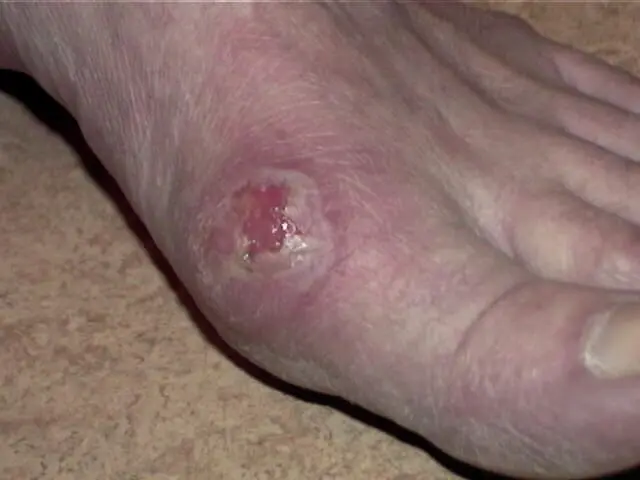
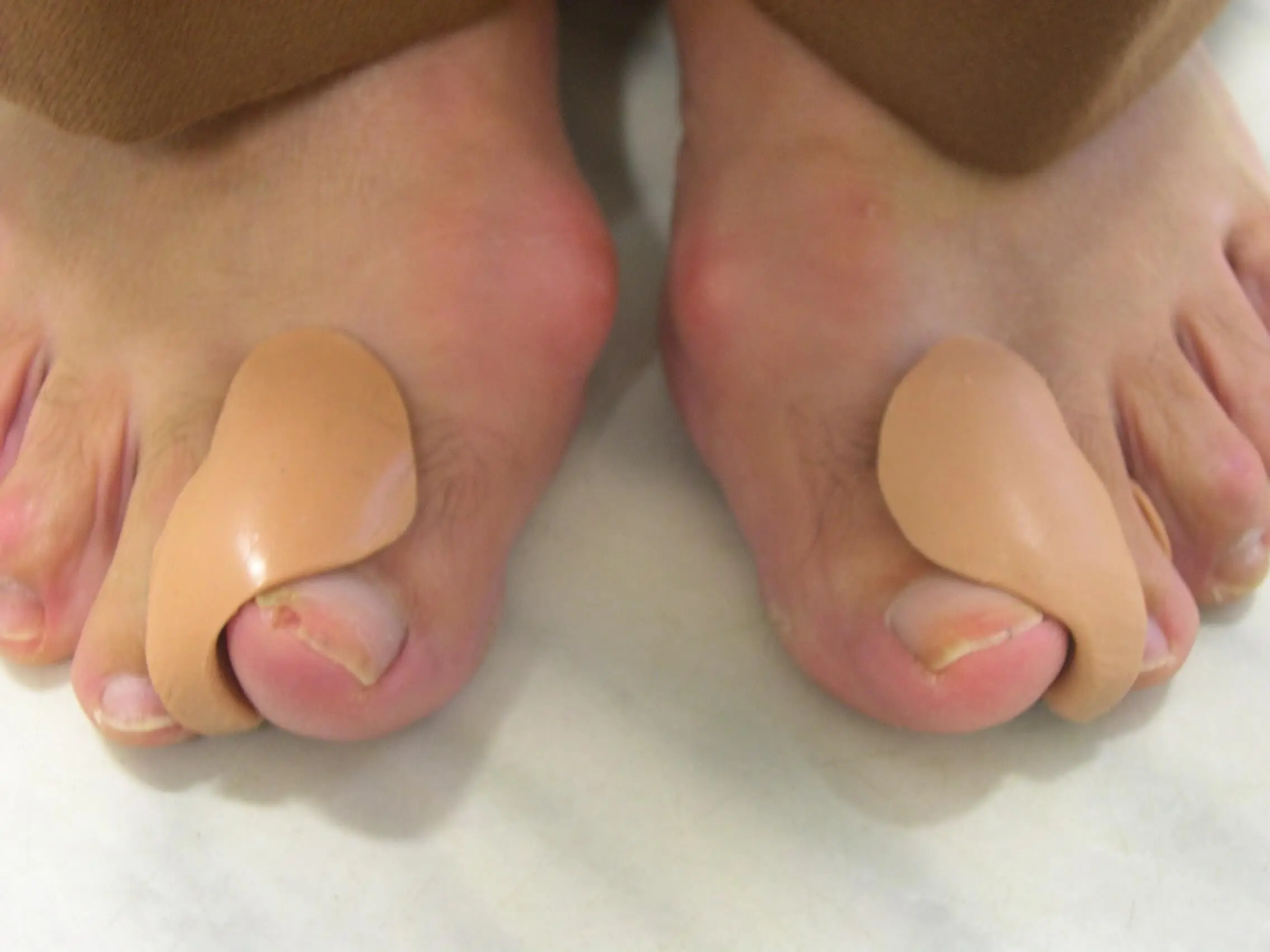
First, the shoes need to be adjusted in order to avoid friction, and choosing flat shoes, with a wide, smooth tip, can do this. Orthotics in itself can correct a possibly accompanying rear foot problem or metatarsalgia, but because of this, there will be basically less space available for the big toe and the friction will be worsened.
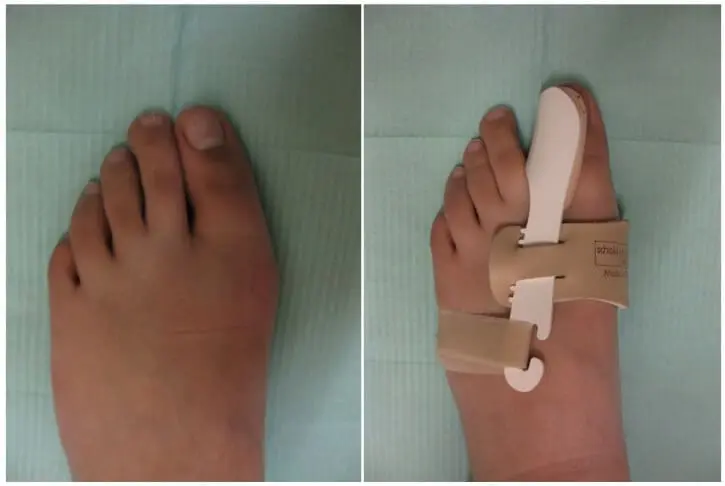
Night splints have a certain benefit as long as your growth is not yet completed, in other words: this treatment is no longer recommended after adolescence.
Podiatrists can make certain corrective and stabilizing orthotics for you. These can sometimes slow down the process of the deviation, but they will certainly not be a permanent solution. If, despite all these changes, the pain persists, know that a surgical treatment may bring solace.
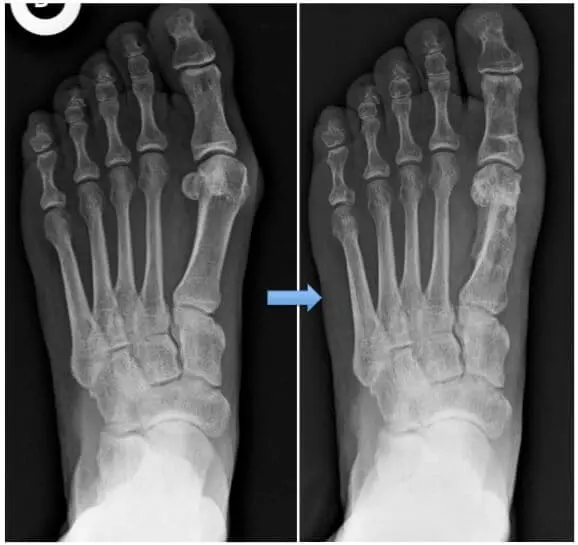
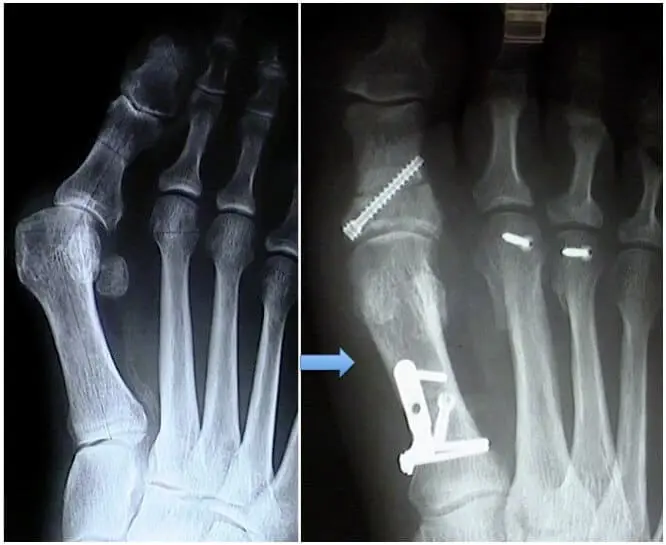
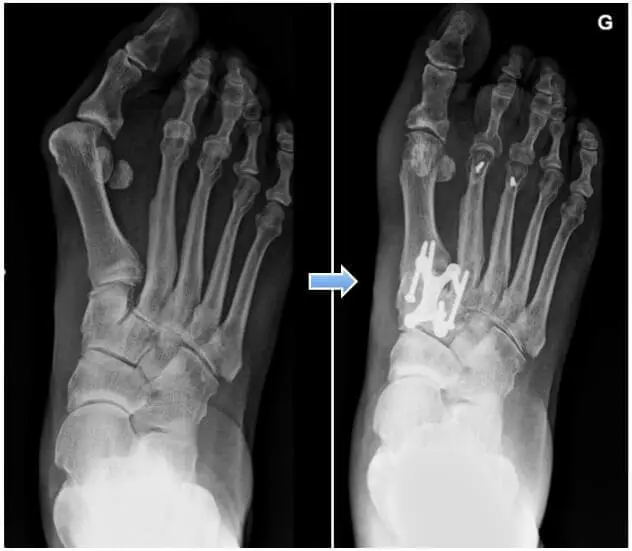
There are many types of surgical procedures to put the big toe in a straight position again and thus, to heal the irritation on the inside.
The chosen technique will depend on the following factors: the severity and the size of the deviation, corrective ability (i.e. can it be passively reduced to a straight position), the presence of osteoarthritis, the presence of associated pathologies, joint mobility, the preference of the surgeon, the length of the big toe compared to the others… The goal is always to restore the imbalance that has arisen around the joint, by replacing the metatarsal bone on top of the sesamoid bones.
You can consider hallux valgus surgery, from the time the change of footwear is no longer sufficient or when, in the presence of hallux valgus, pain occurs at the bottom of the foot or near the toes.